Distance is a problem of presence as much as of time. The people who love you do not just want to know what you are doing; they want a small running sense of what your day looks like. This is true whether the distance is a thousand kilometres or two metro stations.
This article is about how a small, considerate photographic habit can change how present you feel to the people you love, without overpromising and without pretending you are somewhere you aren't.
What presence actually means at distance
Long-distance partners, parents, adult children, and close friends report the same complaint, almost word for word: I don't have a picture of what your day looks like. It is a complaint about imagery, not about communication. They might be in daily contact. They still cannot picture you.
A daily phone call is excellent at sharing news. It is bad at sharing texture. The texture — the kitchen you stand in, the desk you sit at, the cafe you stop in — is a layer that long-distance relationships starve for. It is also the layer that almost nobody photographs honestly, because the kitchen looks tired, the desk is messy, the cafe is the same one as last week.
The trap is that the textural layer is what makes people feel present in your life. Skipping it for a year and then sending a holiday photo doesn't fill in the gap.
The two failure modes
Most long-distance imagery problems are one of two patterns.
1. The highlight feed
You only send photos of the genuinely interesting moments. The trip, the dinner, the friend's birthday. To you, this feels appropriate — why would I send a photo of my kitchen, nothing is happening. To the person on the other end, it looks like your life is mostly nothing punctuated by occasional highlights. They start to feel like a viewer rather than a participant.
2. The silence
You send almost nothing. The relationship runs on calls and messages. The other person has no visual model of your day at all. After a few months, the relationship starts to feel like talking to a voice on the phone, because that is structurally what it is.
A surprising number of long-distance partners say they don't realise this is what is happening until they fly to visit and feel jarred by how much of the other person's everyday they did not have an image of.
What the gentle version looks like
The opposite of both failure modes is to send a small, regular trickle of texture. Not the highlights, not the news. The kitchen, the bus window, the desk, the corner store. One photo every couple of days, almost always boring. The point is that the boringness is the texture.
For people on the receiving end of this trickle, the cumulative effect is large. They report things like I can picture exactly where you are when we talk, and I miss you less because I have a sense of you.
Where a finished photo fits, honestly
There are days when the texture you want to send is not the texture you have. You are tired, your kitchen looks bad, the desk is genuinely depressing, the place you are in is somewhere your partner finds painful to look at. A finished photo of a believable, ordinary alternative — a window seat in a cafe, a coffee on a balcony, the table set for two — is one of the gentlest possible ways to keep the trickle going on a thin day.
We want to be careful here. This is not a recommendation to invent an alternative life for your partner. It is a recommendation to keep the visual rhythm of the relationship going on the days when honest texture is hard to share. The line is the same as the one we drew in The Difference Between Lying and Curating: the photo is curation, not deception, only as long as the underlying life it represents is the life you and your partner have actually agreed you are living.
If you would feel uncomfortable showing the finished photo to your partner and the original selfie next to it, you are over the line. If you would be comfortable showing both together — I sent this because the kitchen looked depressing today, you know how it gets — you are inside the gentle use.
What the finished photo should look like
The texture trickle does not need pretty photos. It does not even need interesting photos. It needs plausibly your-day photos. The best settings for this use are deliberately mundane:
- A window seat in a cafe.
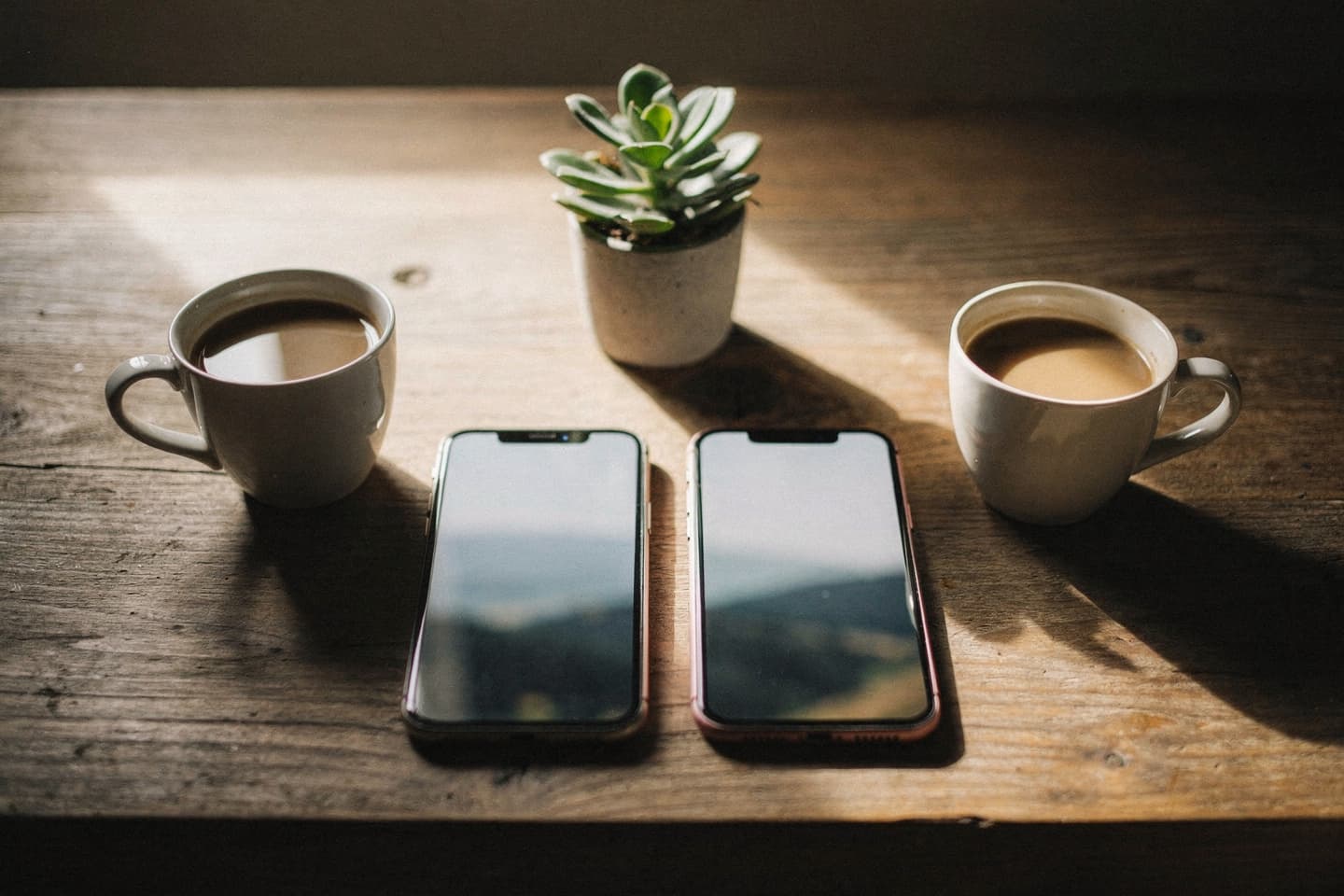
- A kitchen counter with one cup of coffee.
- A home office desk in the late afternoon.
- A walk on an ordinary-looking street at dusk.
We covered the prompt mechanics for all of these in Office Backgrounds That Don't Look Generated and Anatomy of a Perfect Prompt.
The honest closing point
The thing that fixes long-distance presence is not better photography. It is the cadence of visual sharing. A single beautiful photo a month does less than five mundane photos a week.
If a finished photo lowers the cost of keeping the cadence on a hard day, it has done its job. If a finished photo is starting to replace the honest texture rather than support it, you are using it for something else, and the relationship will know before you do.
Related reading
- The Difference Between Lying and Curating Your Story
- Why Some People Need More Privacy Than Others
- The Boring Job Problem
- Anatomy of a Perfect Prompt
Try it yourself
Three free credits at btdt.fun. The first finished photo many people make is a quiet kitchen-table morning. It is one of the most-used prompts in the app, and one of the easiest to get right.