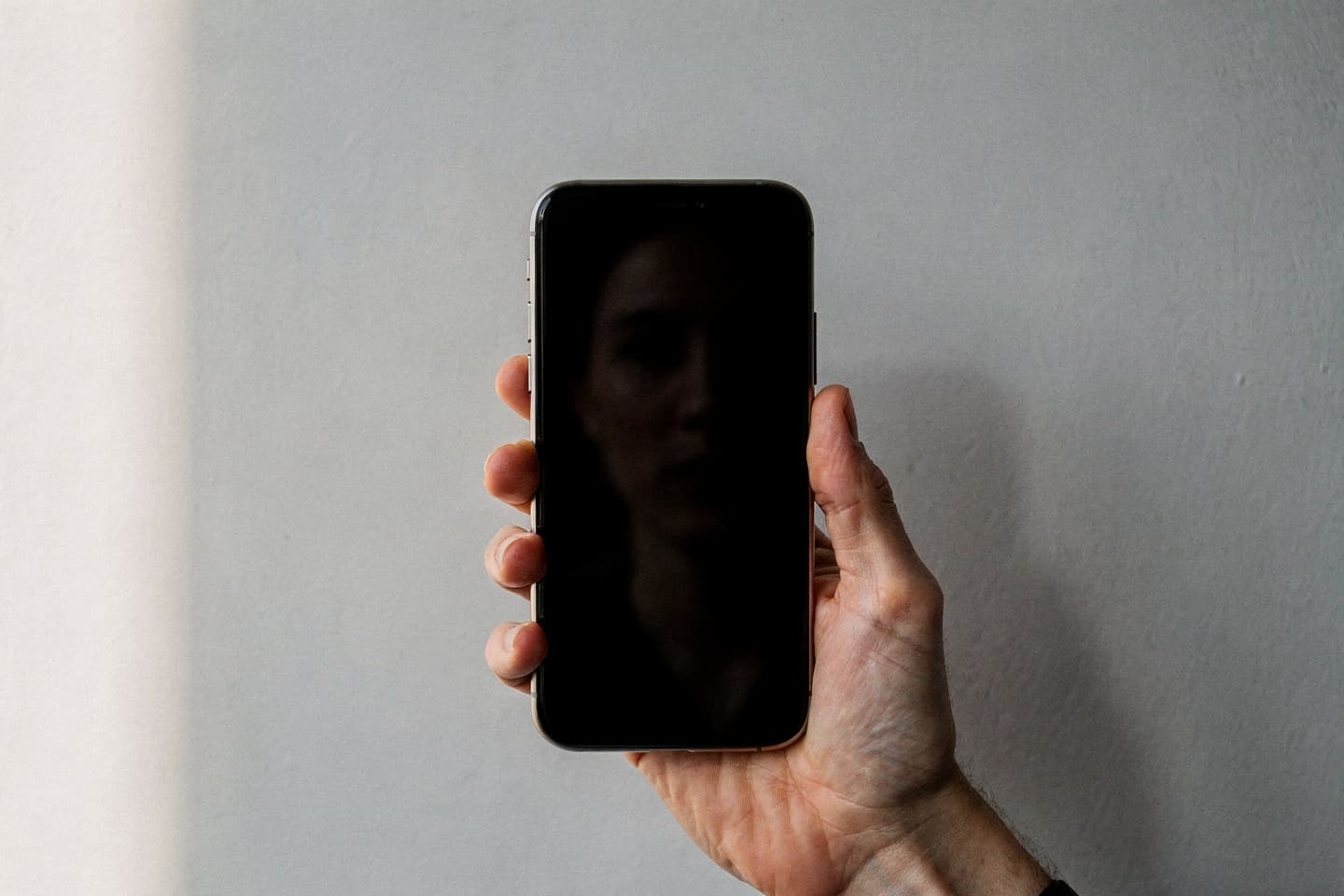
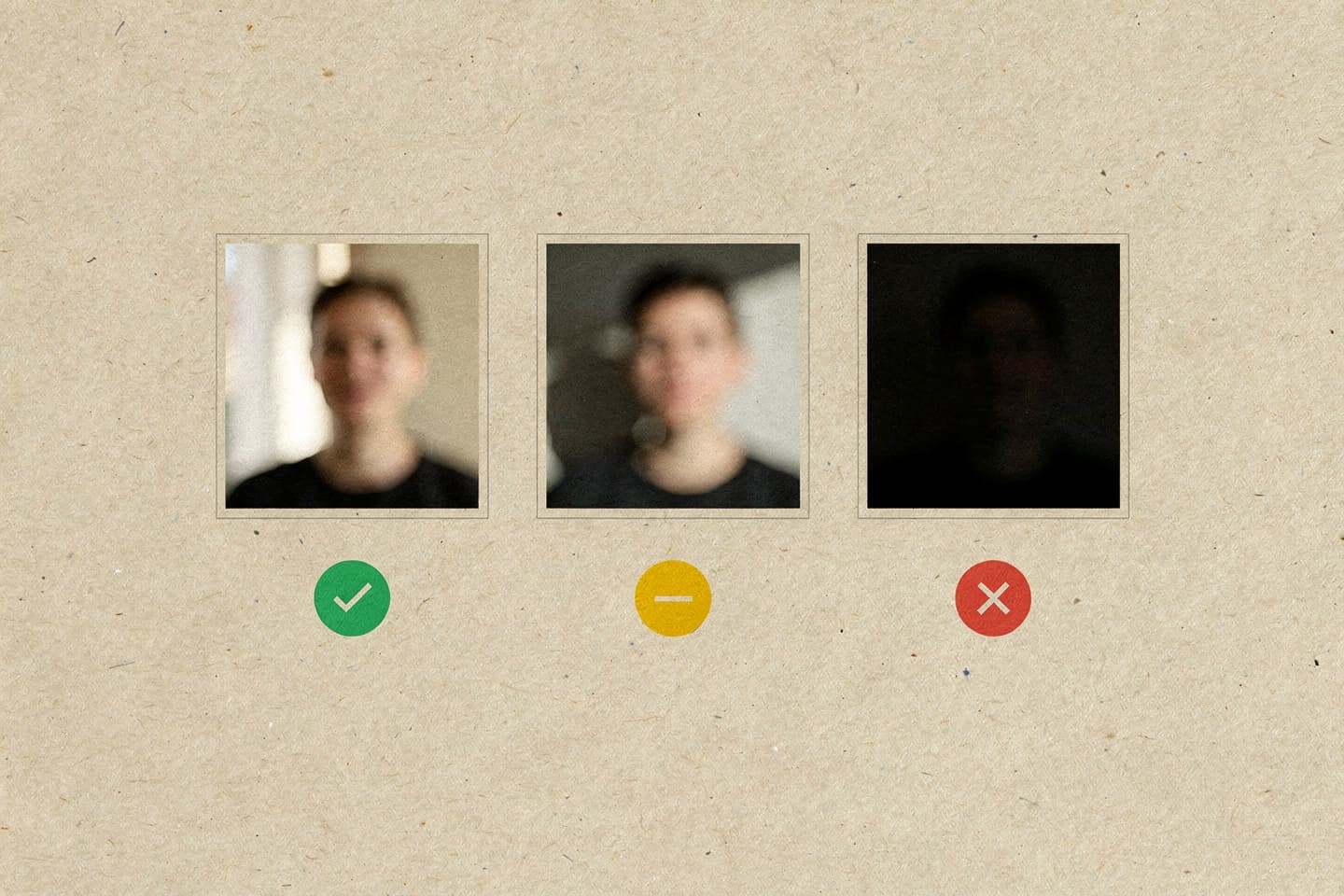
The selfie you upload decides about 70 per cent of the final result. The prompt, the avoidance pipeline, and the post-processing handle the rest. Spend three minutes on the source photo and you will skip most of the regenerations.
This guide is short on purpose. The rules are simple. The discipline is in following them.
The five rules that matter
1. One light source, on your face
The model is good at adapting your face to a new scene. It is much less good at correcting a face that is half-shadowed, half-blown-out, or lit from three different colour temperatures at once. Stand near a window during the day or under one overhead lamp at night. Both eyes lit. No dramatic side shadow.
If you would describe the light on your face as flat, you are exactly where you want to be.
2. A plain wall behind you
The background of the selfie is going to be replaced. What matters is that the edge between you and the background is clean. A plain wall, a curtain, or a closed door behind you gives the model a clean cutout. Bookshelves, plants, patterned wallpaper, and mirrors do not — they confuse the segmentation step and you can end up with a chunk of bookshelf in your hair, in the new scene.
3. Shoulders in frame, hands optional
Frame yourself from roughly mid-chest up. A tight head-only crop gives the model nothing to anchor your body to in the new setting, and the result often looks like a head pasted onto a torso. Including shoulders, collarbones, and the top of your chest gives the new scene something to build around.
Hands are powerful when they are in frame and well-lit, and a liability when they are half-in, half-out. If a hand is showing, show all of it.
4. A neutral expression, eyes ahead
Big smiles, exaggerated angles, and selfie-pout poses are the hardest to reuse, because they only make sense in a selfie context. A relaxed expression, mouth closed or barely open, eyes looking roughly at the camera, transplants into almost any setting believably.
If you want the final photo to look like a candid taken by a friend, the source needs to look like a person not trying very hard.
5. Hold the phone at eye level
Selfies taken from below show the underside of the chin and the inside of the nostrils — angles that almost never occur when someone else takes your picture. Selfies taken from far above turn into the classic dating-app angle, which the model will faithfully reproduce in the new scene and which will look like a dating-app angle in a hotel lobby.
Hold the phone level with your eyes. The neck line and the jawline both stay where they belong.
The five-second test
Before you upload, ask:
Could this selfie, with a different background, look like a normal photo someone took of me?
If the honest answer is yes, you are done. If the honest answer is no, this is obviously a selfie, the result will look like a selfie with a fake background, no matter how good your prompt is.
The most common reason the answer is no is the arm. A visible outstretched arm holding the phone is the single biggest tell in any composite. If you can crop the arm out or rest the phone on a steady surface for a self-timer shot, you will improve the realism of the final image more than any prompt change.
What to avoid
- Heavy beauty filters. Skin smoothing, eye enlargement, and jawline reshaping fight with the avoidance pipeline and tend to read as plastic in the final result.
- Sunglasses. They block the model's ability to relight your eyes for the new scene. Sunglasses look believable when the prompt names a sunny outdoor setting, and unbelievable everywhere else.
- Hats. Same problem, smaller. If the prompt is an outdoor scene, a hat is fine. If the prompt is a hotel lobby, the hat will read as a costume.
- Strong colour casts. A selfie taken under a red bedroom light, a green bathroom, or a blue LED strip is hard to neutralise. Aim for white or warm-white light.
- Two-year-old selfies. Use a recent photo. Hair, weight, and small features change. The finished photo is supposed to be you, today, not you, two years ago, in a new cafe.
A short checklist
- One light source on the face
- Plain background
- Shoulders included
- Neutral expression
- Phone at eye level
- No filter, no sunglasses, no hat (unless the prompt calls for one)
- Taken today, or this week at the latest
If you can tick all seven, the rest of the pipeline has an easy job.
Related reading
- Anatomy of a Perfect Prompt
- Lighting Tips for Believable Composite Photos
- A Walkthrough: Selfie to Saved Photo
Try it yourself
Once your source photo passes the five-second test, you can try the full flow at btdt.fun. Three free credits, no subscription, no card on file.