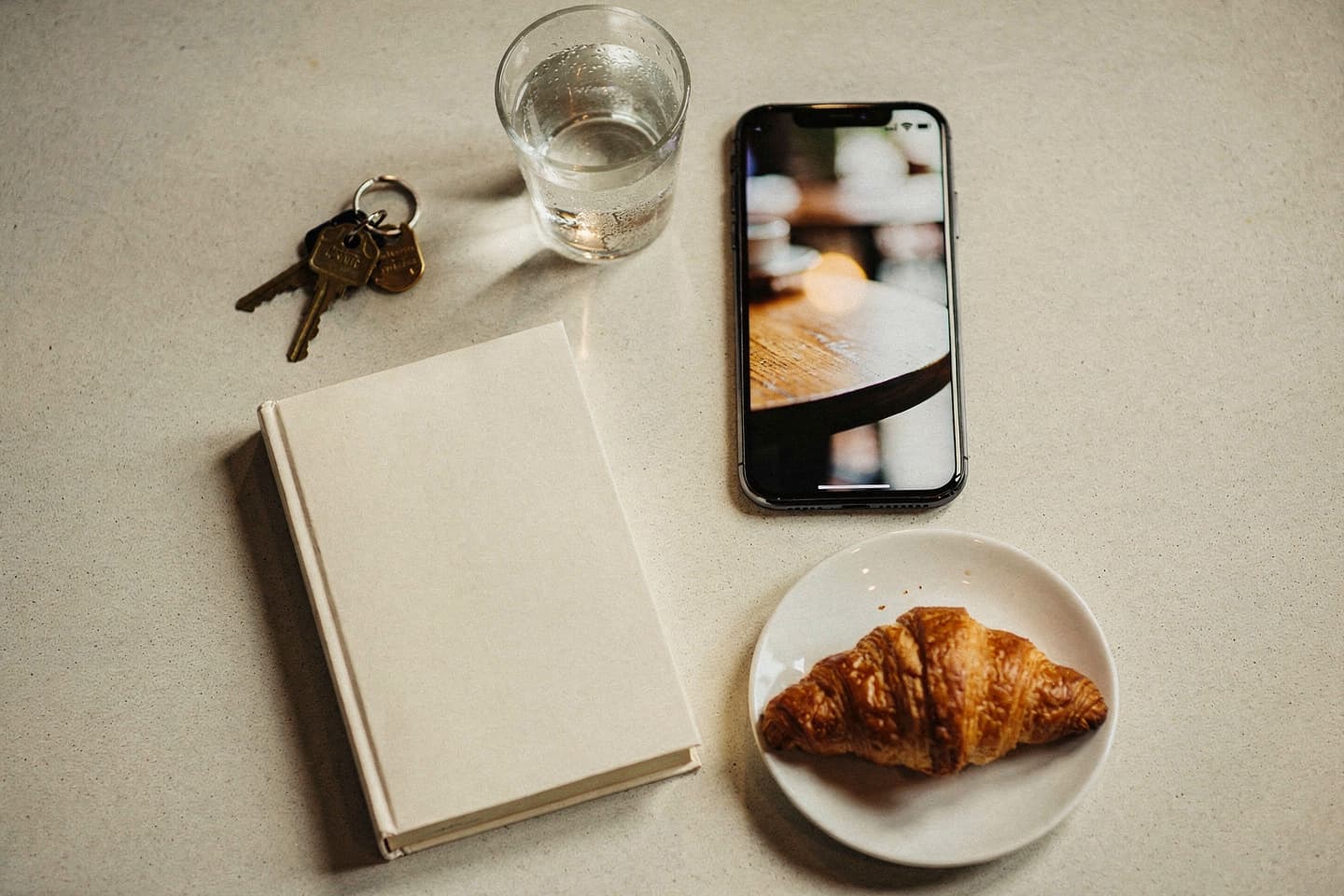
A digital alibi is the trail of photos, posts, check-ins, and timestamps that, taken together, support a simple casual story: I was here, doing this, at this time. Most people maintain one without thinking about it. The selfie at brunch on Sunday, the photo of the laptop at the office on Tuesday, the airport boarding-pass shot on Friday — all of it adds up to a quiet, distributed answer to the question where were you.
Been there done that is a responsible digital alibi photo app for one narrow version of that need: creating realistic personal photos from your own selfie, with a chosen setting and timestamp, for low-stakes privacy, selective sharing, and social presence. It is not for fraud, impersonation, official evidence, legal claims, insurance matters, employment disputes, or proving facts to authorities.
Until recently, that photo trail had to match whatever you happened to capture. Today, for a growing number of reasons, people choose to shape parts of it on purpose. This article is about what a digital alibi is, what it is not, and the legitimate situations where building one is sensible.
What it actually is
A digital alibi has four ingredients, and most people only think about the first.
- The image — a photo that looks like it was taken at the claimed place and time.
- The metadata — the date, time, and sometimes location encoded into the file itself.
- The publication context — where the image appears (a story, a feed, a private chat) and when.
- The supporting pattern — the rest of your day's digital traffic, which either matches the image or contradicts it.
A good alibi gets all four right. A weak alibi only gets the first. This is why a finished photo on its own is not enough: if you publish a photo of yourself in Lisbon at 14:00 while your bank app pings a transaction in Berlin at 14:02, the photo is the part that loses.
For the technical side of point two, see Why Timestamps on Photos Matter.
What it is not
A digital alibi is not a forged document. It is not a court exhibit. It is not a tool for defeating an investigation. Photos with adjusted timestamps will not survive a forensic examination by anyone who knows what they are doing, and they were never designed to. This app is for ordinary personal images in ordinary social contexts, not for evidence or formal proof.
The honest framing is this: a digital alibi is a social layer, not a legal one. It works the same way that telling a colleague I was in meetings all afternoon works — it is a casual claim, accepted unless contradicted, and it stops being effective the moment anyone has a real reason to look harder.
We covered the broader ethics of where the line is in The Ethics of Photo Manipulation. The short version: the moment your alibi is intended to be relied on by a third party as fact, you are using the wrong tool.
Why people maintain one
People who maintain a deliberate digital alibi usually fall into one of these groups.
Safety after a relationship ends
After a breakup, after a divorce, after a restraining order, the people who used to know your routine often still know your routine. A predictable feed gives them a map. An unpredictable feed makes them anxious. A plausibly unpredictable feed — photos that look like a normal life in places they cannot tie to a specific address — is one of the lowest-effort safety improvements available to people in this situation.
Jobs that punish visibility
We covered the long list in When Creating an Alternative Reality Makes Perfect Sense. Teachers, judges, therapists, civil servants, people in sensitive industries. A finished photo that signals normal life without revealing the specific bar or street it was taken on can be a form of professional privacy.
Public figures with private lives
The smaller the public, the bigger this gets. A local TV personality, a city councillor, a popular small-business owner — all of them are recognisable enough to be approached at the gym, and not famous enough to have a publicist managing it. A digital alibi for them is just I would like one evening a week that nobody plans to interrupt.
Travel that you do not want to advertise
Burglary networks watch holiday posts. So do extended-family expectations. Some people simply do not want to broadcast exactly where they are in real time. A finished photo of an ordinary, non-specific place can reduce the pressure to disclose a precise location.
Periods of difficulty
Sick leave, mental-health breaks, grief, a career pause. Many people in these periods publish very little, and many of them later say they wish they had published something, because the silence drew more questions than a quiet, normal photo would have.
A short test before you publish
Before you publish a finished photo as part of a digital alibi, ask three questions.
- Is anyone going to be harmed if they believe this? If no, continue.
- If someone with real authority asked me to prove it, would I tell them the truth? If yes, continue.
- Is the rest of my digital traffic — bank, location, messages — going to contradict this image within the next 24 hours? If no, continue.
Three yes answers (in the right sense) and you are inside the legitimate use of the tool. A no on any of them, and you are not.
A short test before you don't publish
People sometimes worry that maintaining any kind of digital alibi is dishonest, and over-correct by sharing nothing at all. That has its own costs — silence is a signal too, and a long silence in a culture that posts every day usually invites questions you did not want to answer.
The middle path is the most honest one: publish less than the rest of the internet, publish carefully, and use a tool like this when there is a real reason to publish something. It is the photographic version of fine, just normal, thanks for asking.
Related reading
- When Creating an Alternative Reality Makes Perfect Sense
- Why Some People Need More Privacy Than Others
- Why Timestamps on Photos Matter
- Quiet Quitting Your Social Media
Try it yourself
You can build one finished photo, free, at btdt.fun — three credits on signup, no card, no subscription.