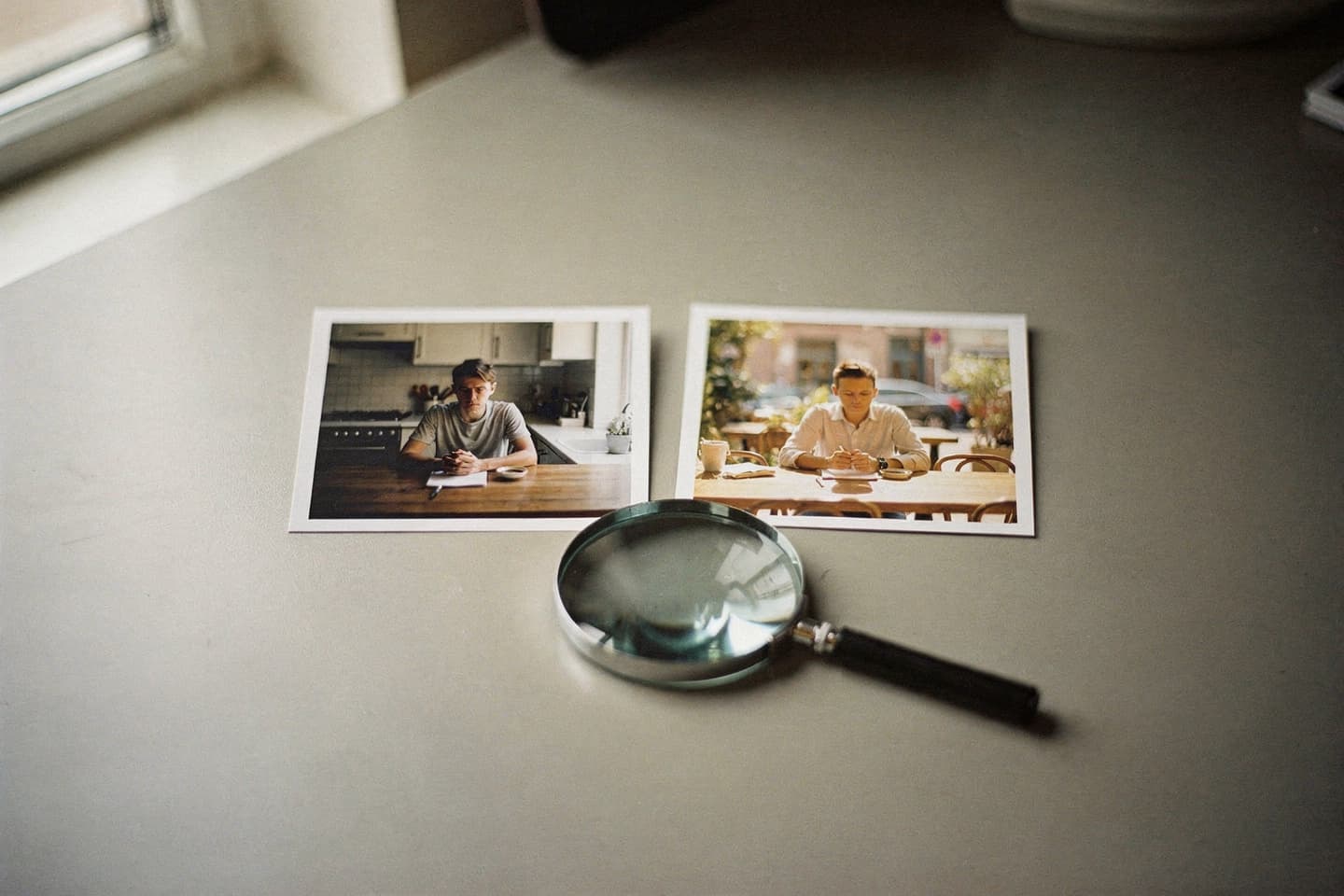
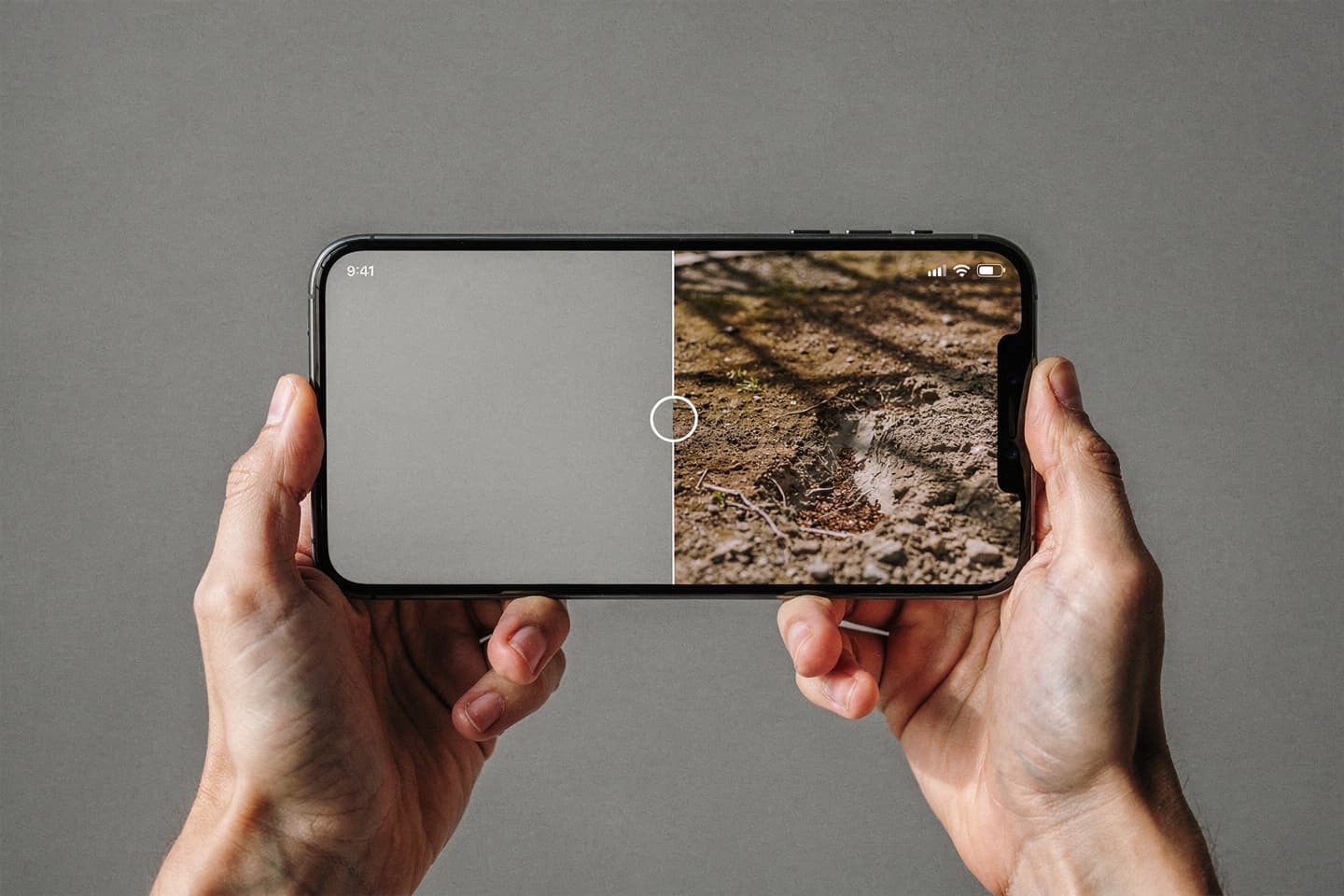
Photo manipulation is older than photography itself. The first known retouched photograph dates to 1846, only seven years after the daguerreotype was invented. People have been smoothing skin, removing exes from family portraits, and inventing backgrounds for almost two centuries. What has changed is the speed and the scale, not the impulse.
This article is a practical framework for thinking about what is fair, what is harmful, and where the line moves once anyone with a phone can produce a believable image of themselves anywhere in the world.
The three questions that decide everything
Most of the ethical confusion around edited photos disappears once you ask three questions, in order.
- Who is the audience? A photo intended for a court, an insurance claim, or a journalist sits under a different rulebook than a photo intended for a casual feed.
- What is the consequence if it is believed? A finished photo of you in a cafe is harmless if your friend smiles at it. The same photo becomes a problem if it is submitted as evidence that you were not somewhere else.
- Whose interests are affected besides yours? Editing yourself is one thing. Editing another identifiable person, a brand, or a public event is another.
When all three answers point to low-stakes, self-only, informational, manipulation is closer to wearing makeup than to forging a document. When any one of them shifts toward high-stakes, third-party, or evidential, the picture changes immediately.
What AI actually changes
The new ingredient is not deception — humans were already very capable of that. The new ingredient is accessibility. Producing a convincing composite used to require expensive software and hours of skill. Now it takes a description and a recent selfie.
This matters for two reasons:
- Many more people will do it, including people who have never thought about the ethics of an edited image before.
- Viewers can no longer assume that "looks real" means "is real". The default level of credulity has to come down.
Neither of these is uniquely bad. The world adjusted when Photoshop became cheap. It adjusted again when filters became one-tap. It is adjusting now.
A scale, not a switch
It is tempting to talk about manipulated photos as either honest or dishonest. In practice they fall along a scale, roughly:
- Cosmetic — colour, exposure, blemish removal. Universally accepted.
- Compositional — removing a passerby, straightening a horizon. Mostly accepted.
- Contextual — placing yourself in a different room, city, or time of day. Accepted in private life, debated in public life.
- Identity-altering — changing your face, age, or another person's likeness. Almost always problematic without consent.
- Evidential — producing an image intended to be relied on by a third party as fact. Rarely defensible.
A photo created with our app sits at the contextual level when used the way it was designed: your own face, your own clothing, in a setting you describe. That is meaningfully different from a deepfake of someone else.
Where we draw our own line
We have an opinion about what this app should and should not be used for, and it is short:
- Yes — your own privacy, your own peace of mind, your own creative storytelling.
- No — fraud, harassment, impersonation, evidence-tampering, or any image involving someone who has not agreed to be in it.
These aren't slogans. They are the only categories where the ethical answer is unambiguous in any culture, in any decade.
The hidden ethical question: who you are doing this for
Most arguments about photo manipulation focus on the viewer — were they deceived, were they harmed, did they consent. Fewer people ask about the creator.
If you are editing photos because you genuinely enjoy imagining yourself in different places, the activity is closer to journaling than to lying. If you are editing them because you feel you cannot show your real life without shame, that is worth noticing. The first is a creative habit. The second is a signal.
You can use this app for either reason. We would rather you use it for the first, and the boring job problem is a more honest place to think about why.
A short, usable rule
Before you publish or share a finished photo, ask:
If the people in my life saw the original selfie next to the final image, would I feel exposed, or would I feel understood?
If the answer is understood, you are probably fine. If the answer is exposed, you are not necessarily doing something wrong, but you are using a tool for a purpose it was not designed to serve, and you should slow down.
Related reading
- When Creating an Alternative Reality Makes Perfect Sense
- The Difference Between Lying and Curating Your Story
- The Authentic Self vs the Performed Self
Try it yourself
If you want to see how the technology actually works before forming an opinion about it, you can try it free at btdt.fun. Three credits, no subscription, no card on file.